Mastering Tricky Spaces: Custom Shading for Apex Windows and Conservatories
Modern architecture often features stunning but tricky glazing—from towering gable ends to expansive conservatory roofs. Unresolved overhead or angled glazing
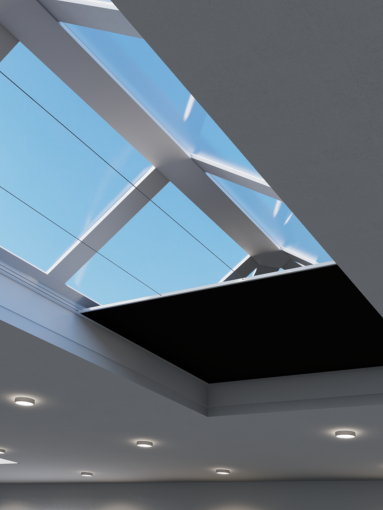
LanternShade™
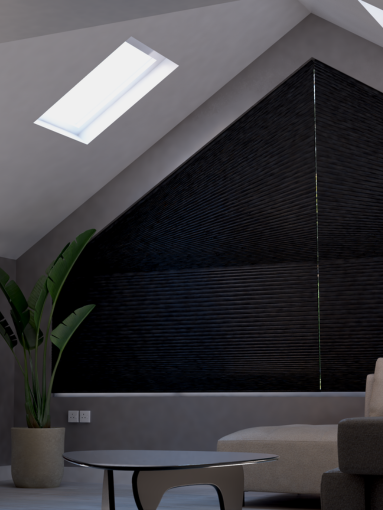
ApexShade™
LanternShade™
ApexShade™
Conservatories are brilliant in theory. All that light, all that space, a room that brings the garden inside. But without the right blinds, they are freezing in winter and unbearable in summer. Conservatory blinds change everything. They control the heat, cut the glare, and turn your conservatory into a comfortable space all year round.
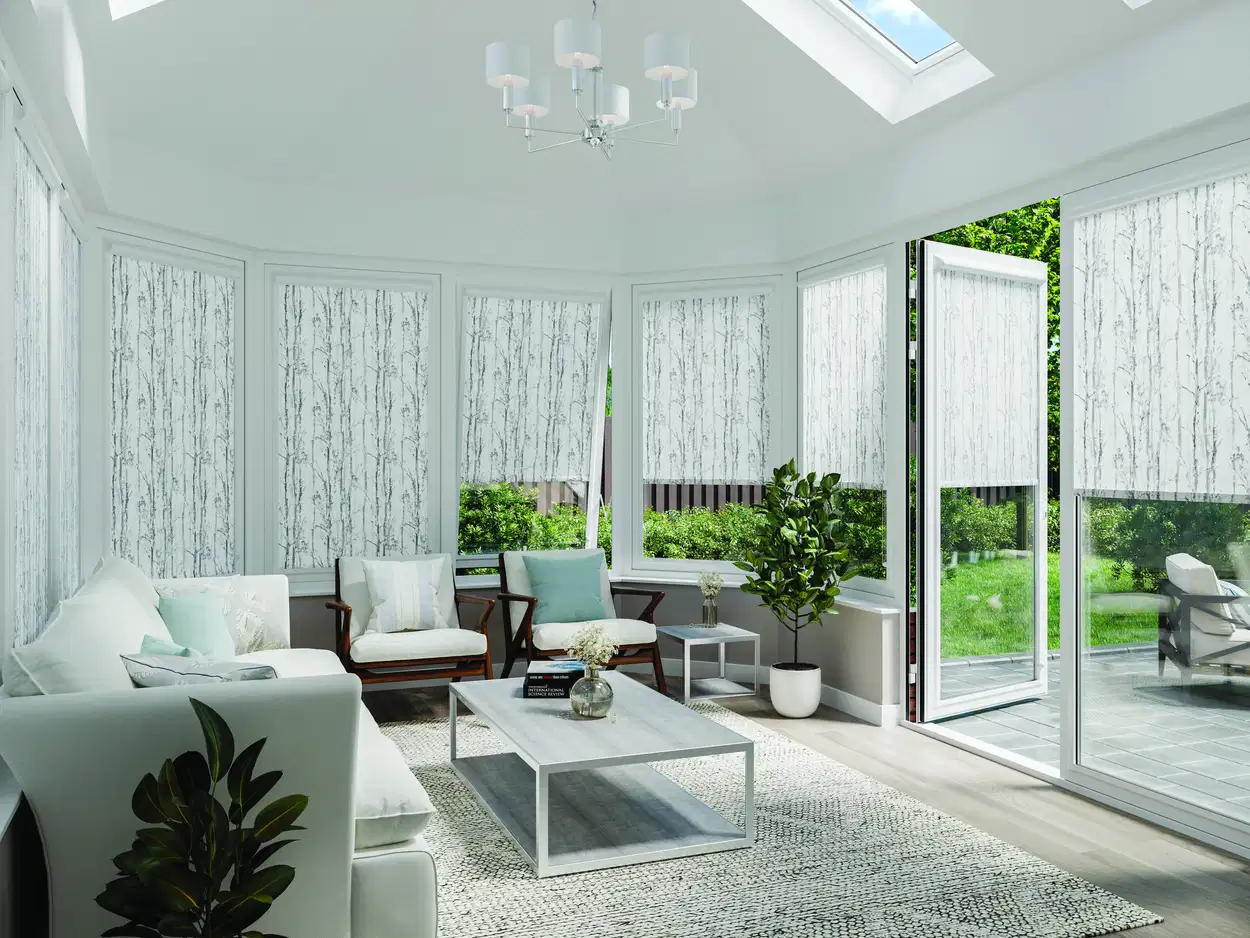
At Perfect Blinds UK, we have been fitting conservatory blinds across Yorkshire since 2013. We cover roofs, windows, and doors with blinds designed specifically for conservatory conditions. Whether you have got a Victorian, Edwardian, lean-to, or P-shaped conservatory, we have solutions that fit properly and work brilliantly.
The right conservatory blinds mean you can use your extra room whenever you want, not just on the three mild days a year when the temperature happens to be perfect.
Use your conservatory all year. Roof blinds keep the worst of the summer heat out and help hold warmth in during winter. Side blinds add privacy and extra insulation. Together, they make your conservatory genuinely liveable.
Stop the greenhouse effect. Glass roofs let sunlight pour in, and that heat builds up fast. Conservatory roof blinds reflect solar radiation before it turns your room into a sauna. The temperature drops noticeably.
Reduce glare. Trying to watch TV or work on a laptop in a bright conservatory is a nightmare. Blinds soften the light and make the space actually usable for everyday activities.
Protect your furniture. UV rays fade sofas, rugs, and wooden furniture surprisingly quickly. Conservatory blinds filter out the damaging rays and keep your furnishings looking fresh for longer.
Privacy when you want it. Conservatories are often overlooked by neighbours. Side blinds let you close off the view when you want some peace without feeling like you are on display.
Lower energy bills. A well-dressed conservatory holds heat better in winter and needs less cooling in summer. Your heating and air conditioning do not have to work as hard.
Roof and sides are different jobs. Conservatory roofs need specialist blinds that handle the angle, the heat, and the structure. Side windows and doors can use more conventional blinds. We usually recommend treating both for the best results.
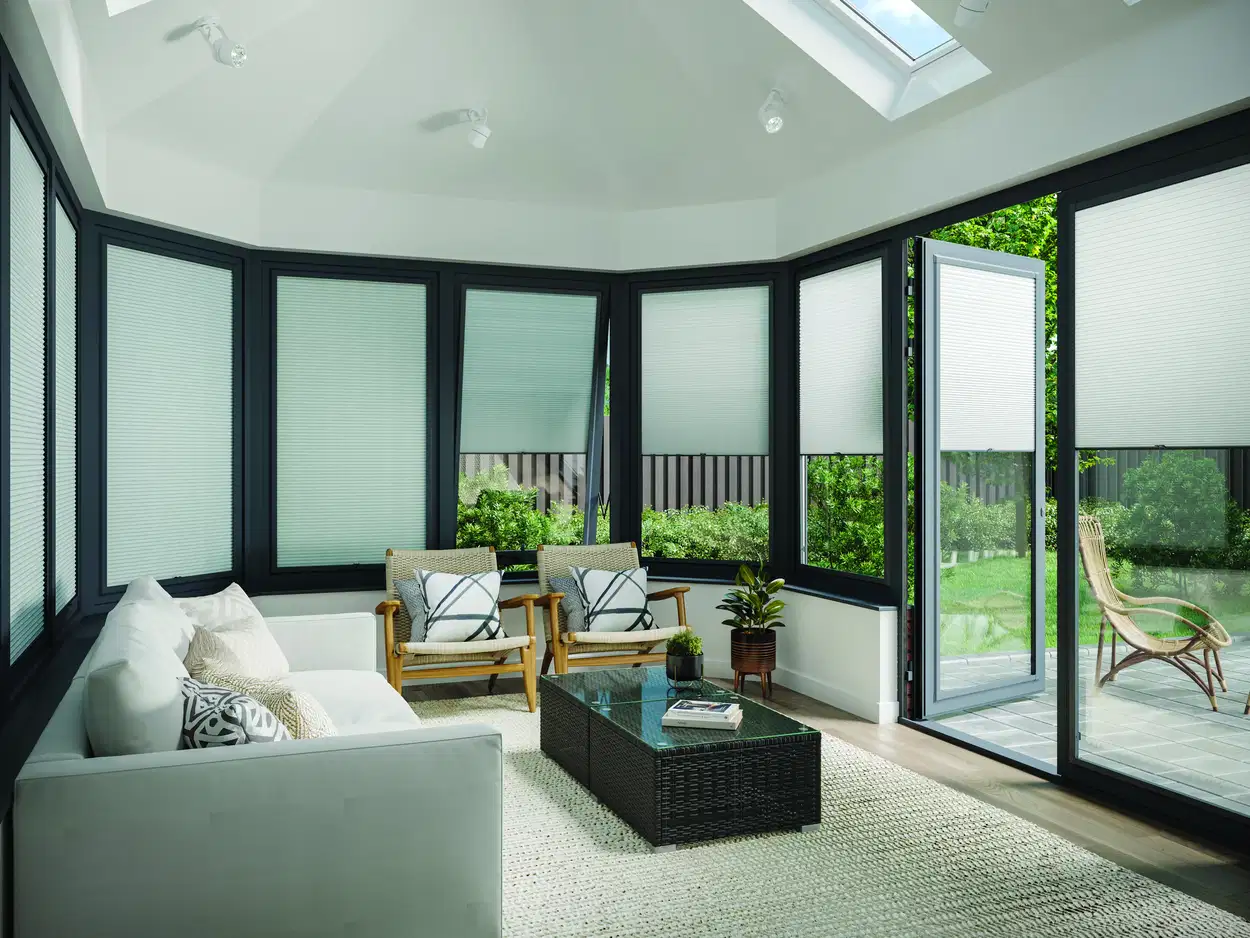
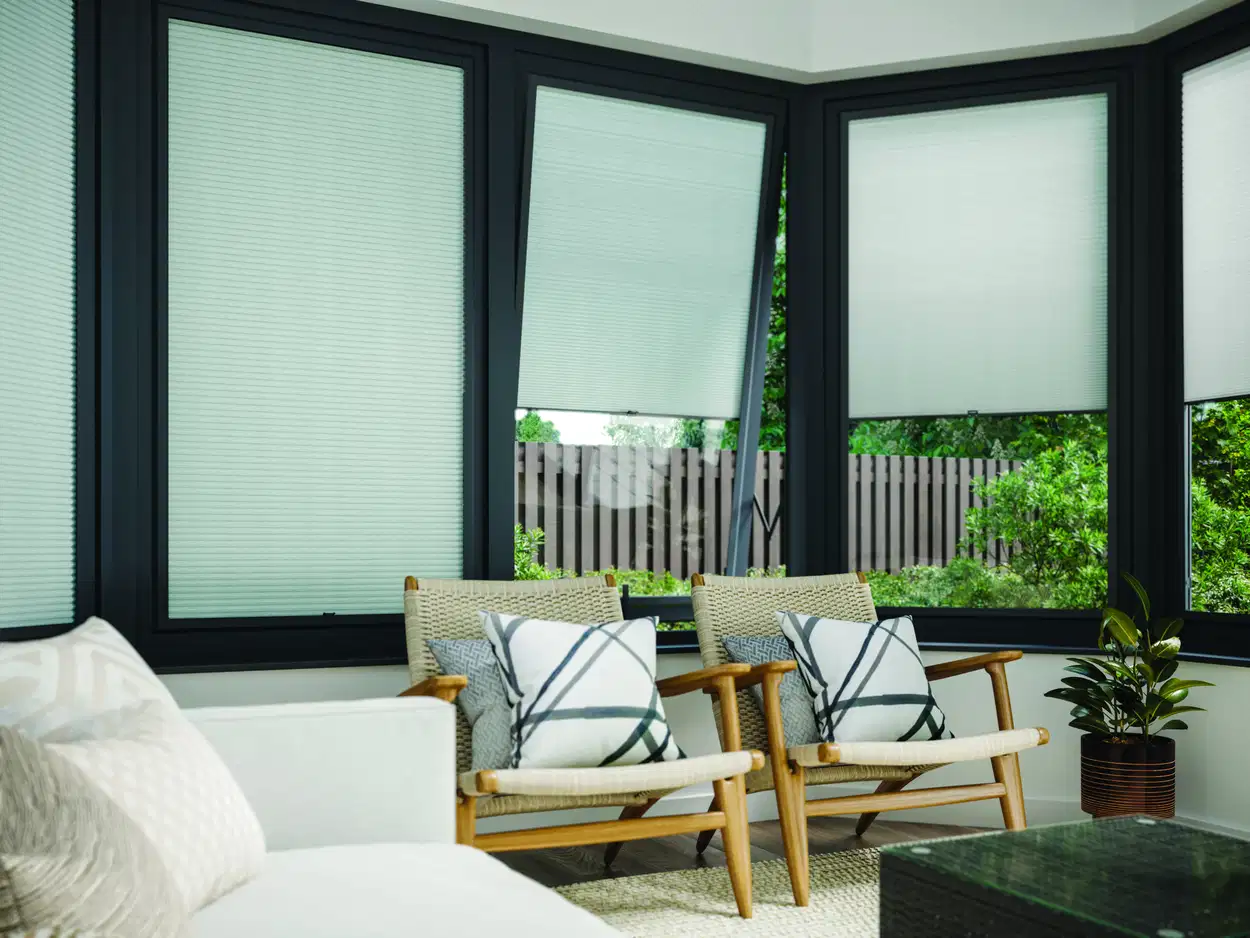
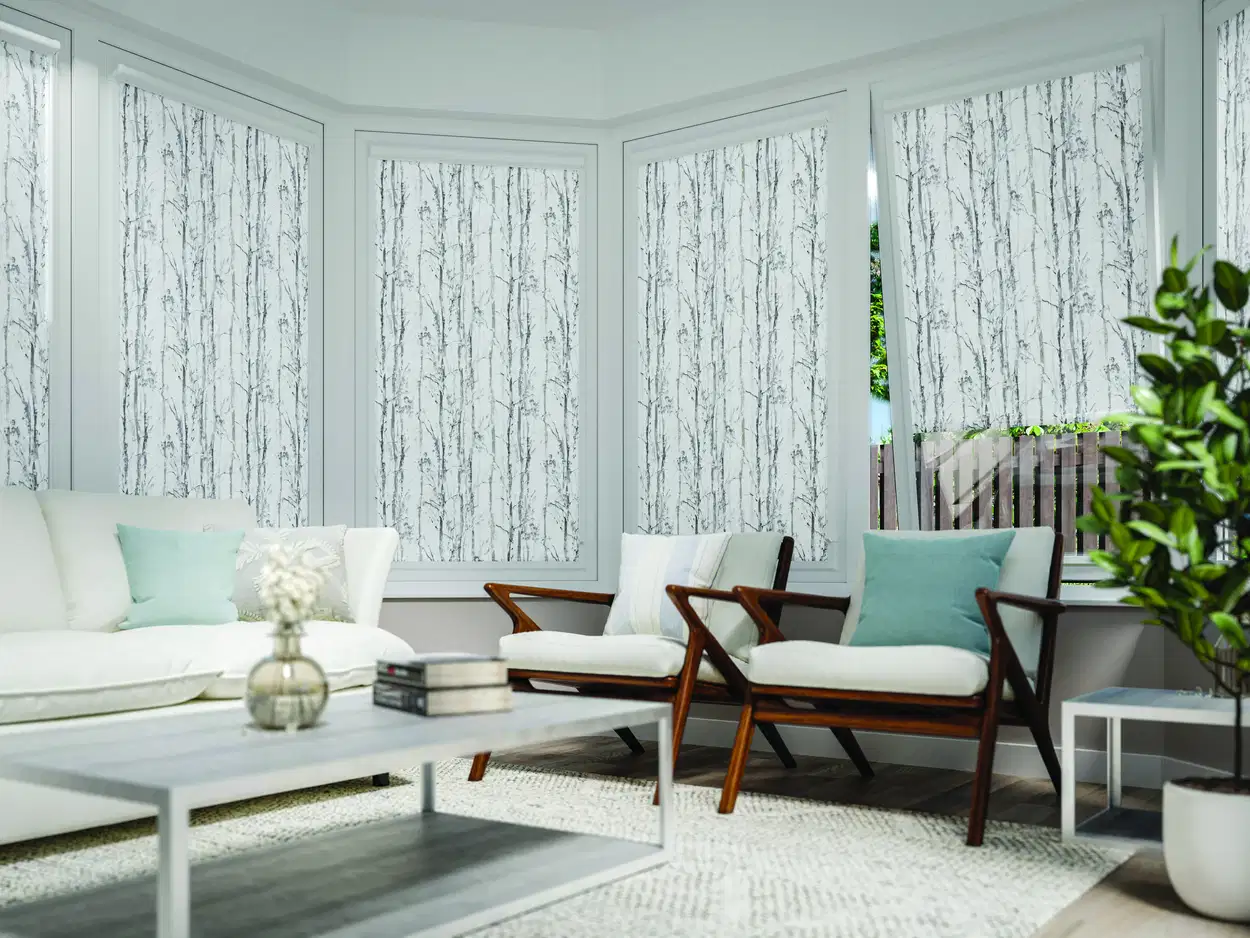
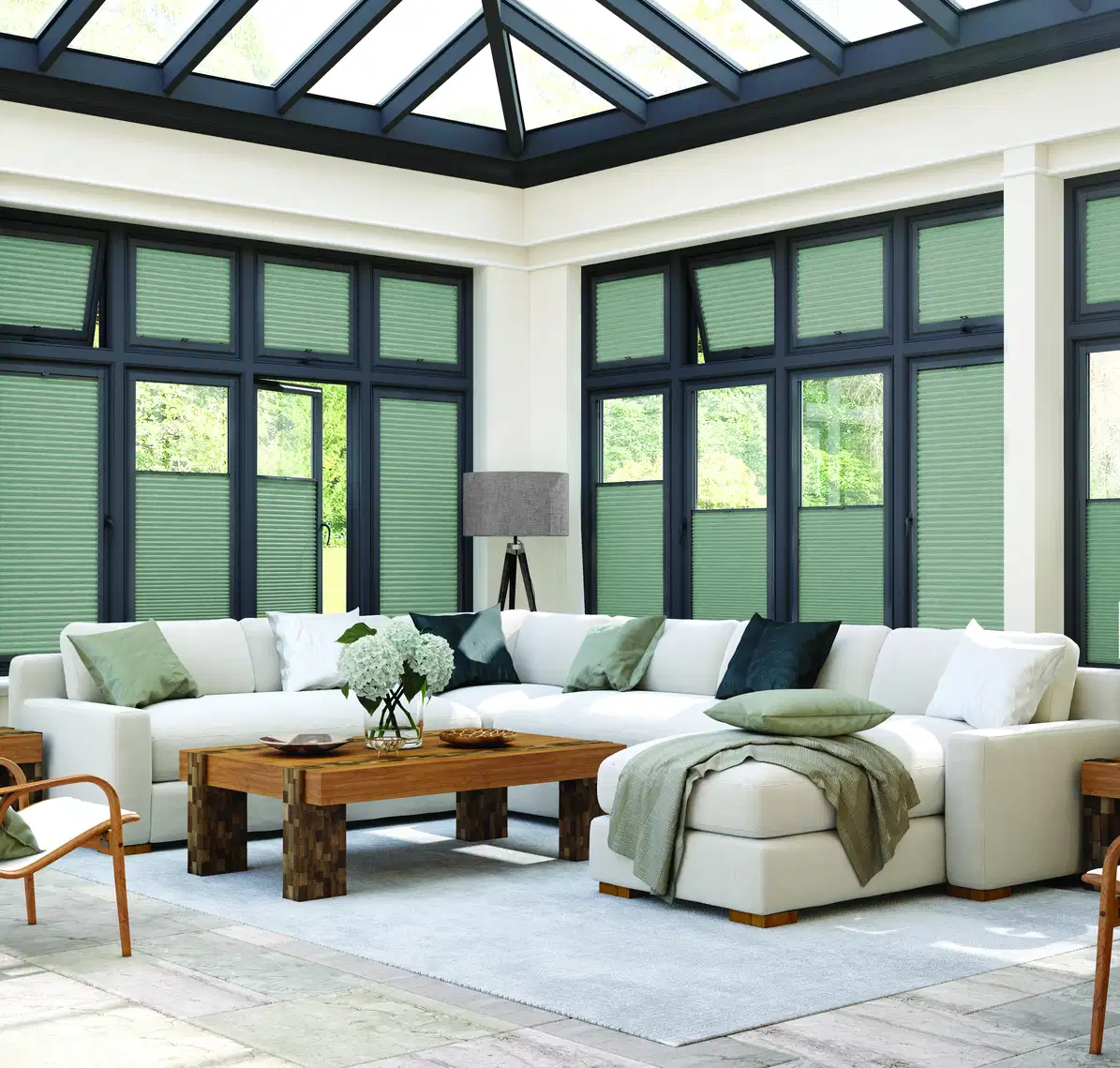
Pleated blinds are popular. Pleated conservatory blinds are lightweight, neat, and work brilliantly on angled roof panels. They fold into a compact stack when open and cover the glass smoothly when closed. Perfect Fit pleated blinds work well on the side windows.
Shaped windows sorted. Conservatories often have triangular, arched, or unusual shaped windows. We make blinds to fit these tricky shapes so nothing gets left out.
Thermal fabrics help. For roof blinds especially, thermal and reflective fabrics make a real difference. They bounce heat back in summer and add insulation in winter. Standard fabrics work, but performance fabrics work better.
Tensioned or free-hanging? Roof blinds are usually tensioned with wires or rails to keep them in place on angled glass. Side blinds can be tensioned or free-hanging depending on your preference.
Colours fade less now. Modern conservatory blind fabrics are designed to resist UV fading. Even bold colours keep their vibrancy much longer than older materials used to.
Roof first, always. The conservatory roof is where most of your heat gain happens in summer and heat loss in winter. Sorting the roof makes the single biggest difference to temperature control and comfort. If budget means you can’t do everything at once, do the roof blinds first and add side window blinds later. Some people find that once the roof is sorted, they don’t need as much coverage on the sides anyway because the temperature is manageable. Side window blinds are more about privacy, glare control, and aesthetics.
Pleated blinds are usually the best option for conservatory roofs. They’re specifically designed for angled glazing, the tensioned systems keep them in place, they come in thermal and blackout options, and they fold neatly when open so they don’t block light unnecessarily. Honeycell pleated blinds are even better for temperature control because of the insulation properties. Some people use roller blinds on conservatory roofs, but they need proper systems designed for the angle – regular roller blinds will sag. We typically recommend pleated for roofs and let you choose whatever you prefer for the side windows.
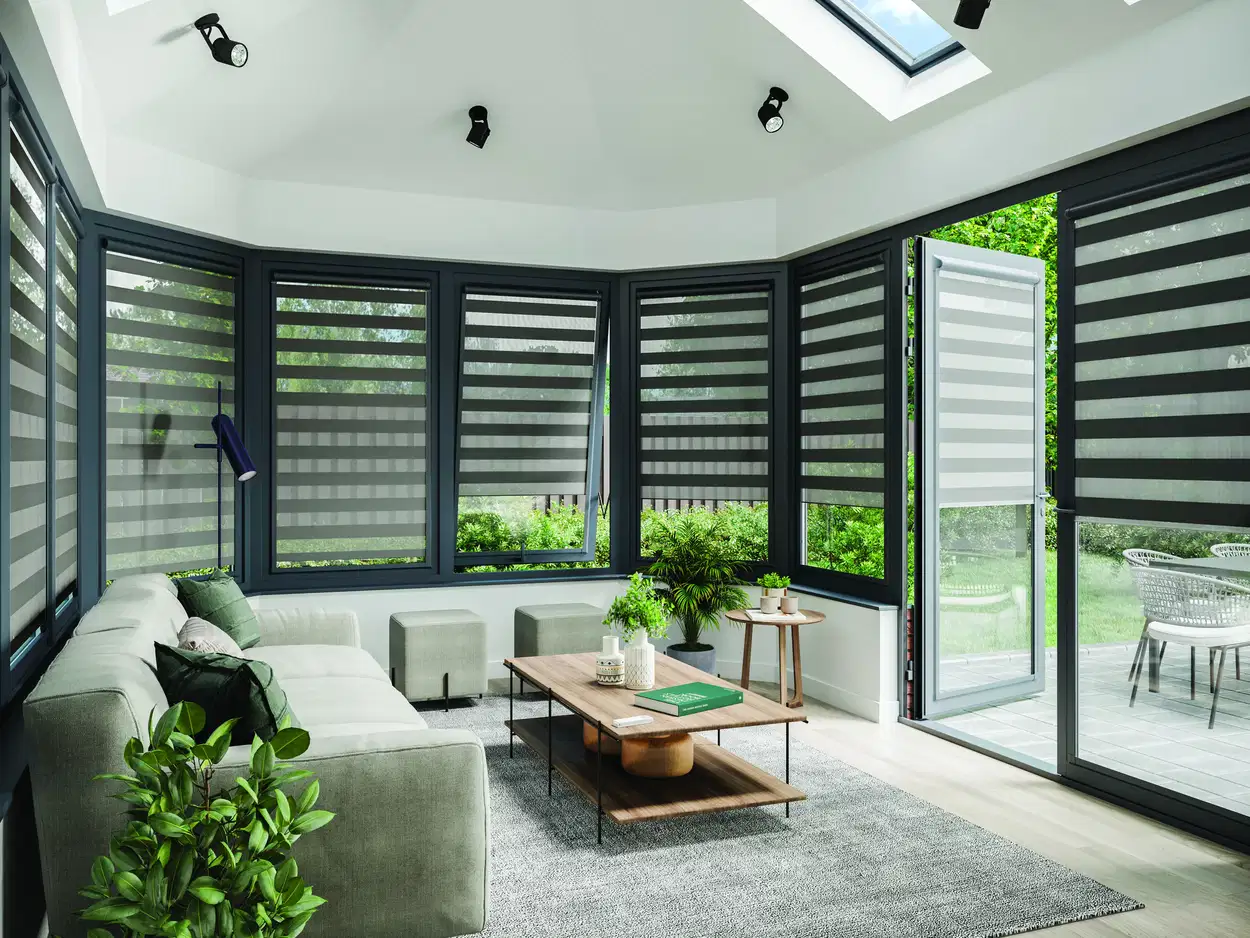
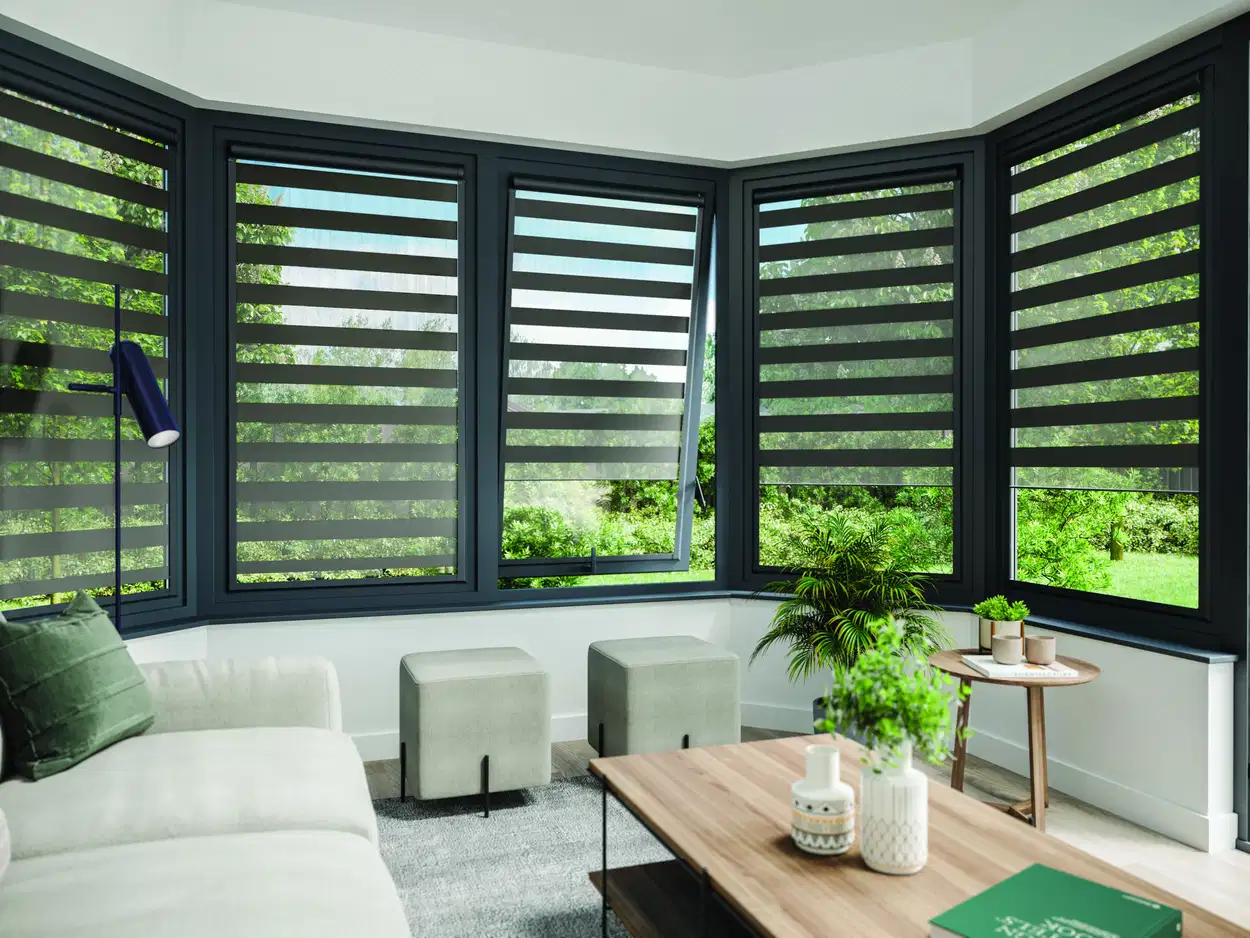
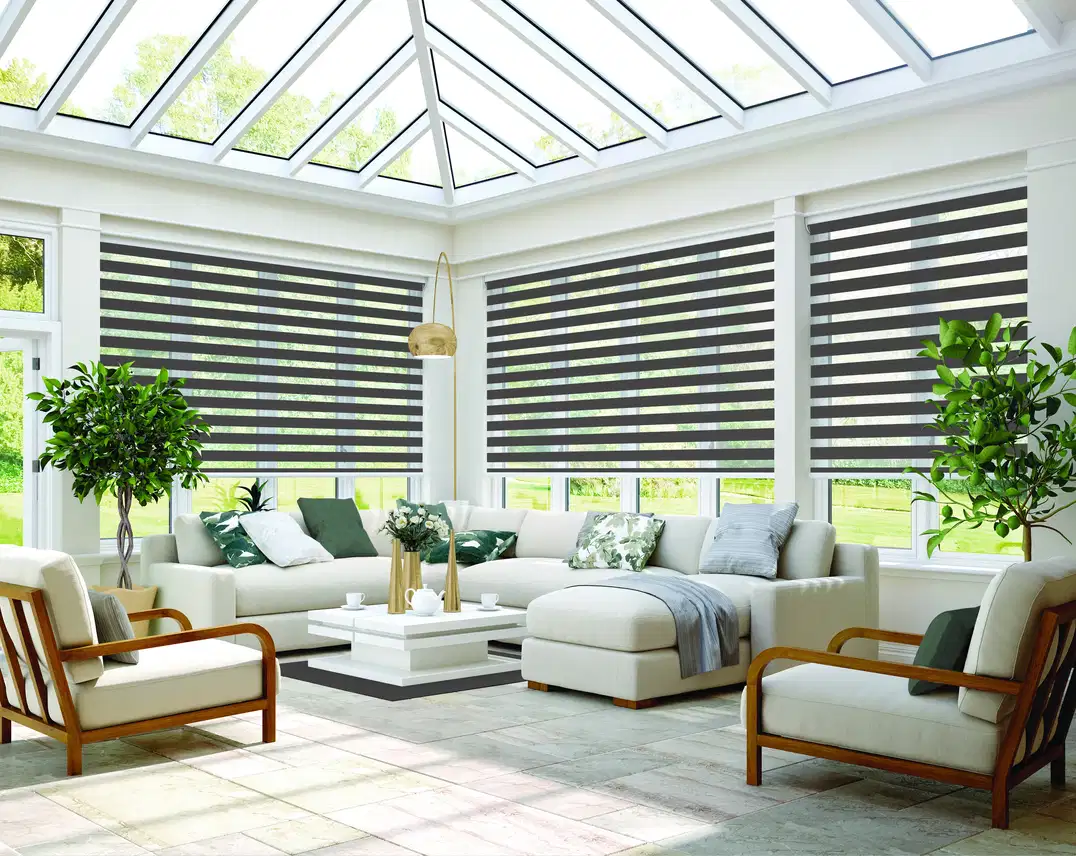
Yeah, and sometimes it makes sense. You might have pleated blinds on the roof for thermal control, Day & Night blinds on the side windows for flexible light control, and vertical blinds on the patio doors because they stack neatly for access. As long as the colours coordinate, mixing types based on function is fine. Some people prefer a uniform look throughout, which is fair enough – we can do all Day & Night blinds or all pleated if that’s what you want. We’ll show you options and let you decide based on what matters to you.
They’ll make a significant difference but won’t completely eliminate overheating if you’ve got a full glass roof in direct sun. Roof blinds block solar heat before it gets through the glass, which is way more effective than trying to cool the room once it’s heated up. Reflective or blackout fabrics work best. Combined with ventilation (opening windows and roof vents), roof blinds can reduce conservatory temperatures by 10-15 degrees easily. You might still need fans on very hot days, but the space becomes usable rather than unbearable. It’s realistic improvement, not magic.
Depends on the blind type and whether they’re reachable. Perfect Fit and Perfectly Fitted blinds on side windows are easy – wipe with a damp cloth occasionally. Roof blinds are harder because you can’t reach them easily. Pleated roof blinds can be vacuumed gently with an upholstery attachment, or you can use a long-handled duster for dust removal. Avoid soaking them – moisture can affect the tensioning systems. Vertical blinds on conservatory doors wipe clean easily. Honestly, conservatory blinds need less cleaning than you’d expect because they’re not in high-traffic areas getting grubby from hands.
No, conservatory blinds are internal window coverings and don’t need planning permission. External conservatory shading like awnings or external blinds might need permission in conservation areas or listed buildings, but internal blinds never do. If you’re in rented accommodation or a leasehold property, check your tenancy agreement or lease – some specify what you can and can’t fit, though blinds are usually fine, especially no-drill systems like Perfect Fit.
For a typical conservatory with roof blinds and side window blinds, we’d usually schedule a full day for installation. Roof blinds take time because of working at height and getting the brackets positioned precisely on the glazing bars. Side windows are quicker, particularly if we’re using Perfect Fit or Perfectly Fitted systems that don’t require drilling. A small conservatory with just side window Perfect Fit blinds might only take 2-3 hours. We’ll give you a realistic timeframe when we quote. We work tidily and clean up after ourselves – you’re not left with mess and packaging everywhere.
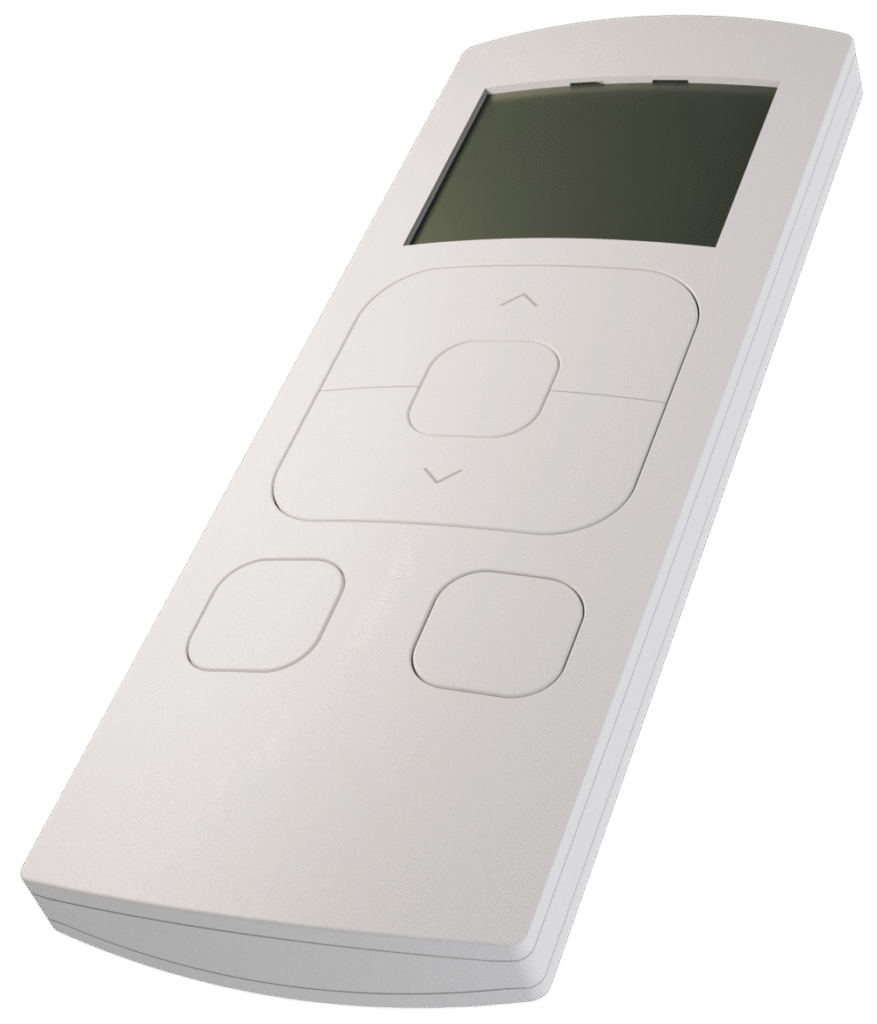
Motorisation. Conservatory roof blinds are often hard to reach, which makes motorisation a smart choice. Press a button and all your roof blinds glide open or closed together. No poles, no stretching, no climbing on furniture.
We fit quiet, reliable motors that handle the job smoothly. For large conservatories with multiple roof panels, motorisation is practically essential unless you enjoy a daily workout.
Smart home control. Connect your motorised conservatory blinds to Alexa, Google Assistant, or Apple HomeKit. Control them from your phone, set schedules, or include them in smart home scenes. Close all the roof blinds when the sun gets too strong. Open them on cloudy days to let the light in.
Sun sensors. Automatic sun sensors detect when it is getting too bright and close your roof blinds without you doing anything. When the sun moves or clouds roll in, they open again. Your conservatory stays comfortable while you get on with life.
Integrated solutions. We can fit matching blinds on your roof and side windows so everything coordinates perfectly. Same fabric family, same control system, one cohesive look throughout your conservatory.
Lantern and roof light blinds. Got a modern flat roof conservatory with a lantern light? We fit specialist blinds for these too. They handle the angles and the heat just as well as traditional conservatory blinds.
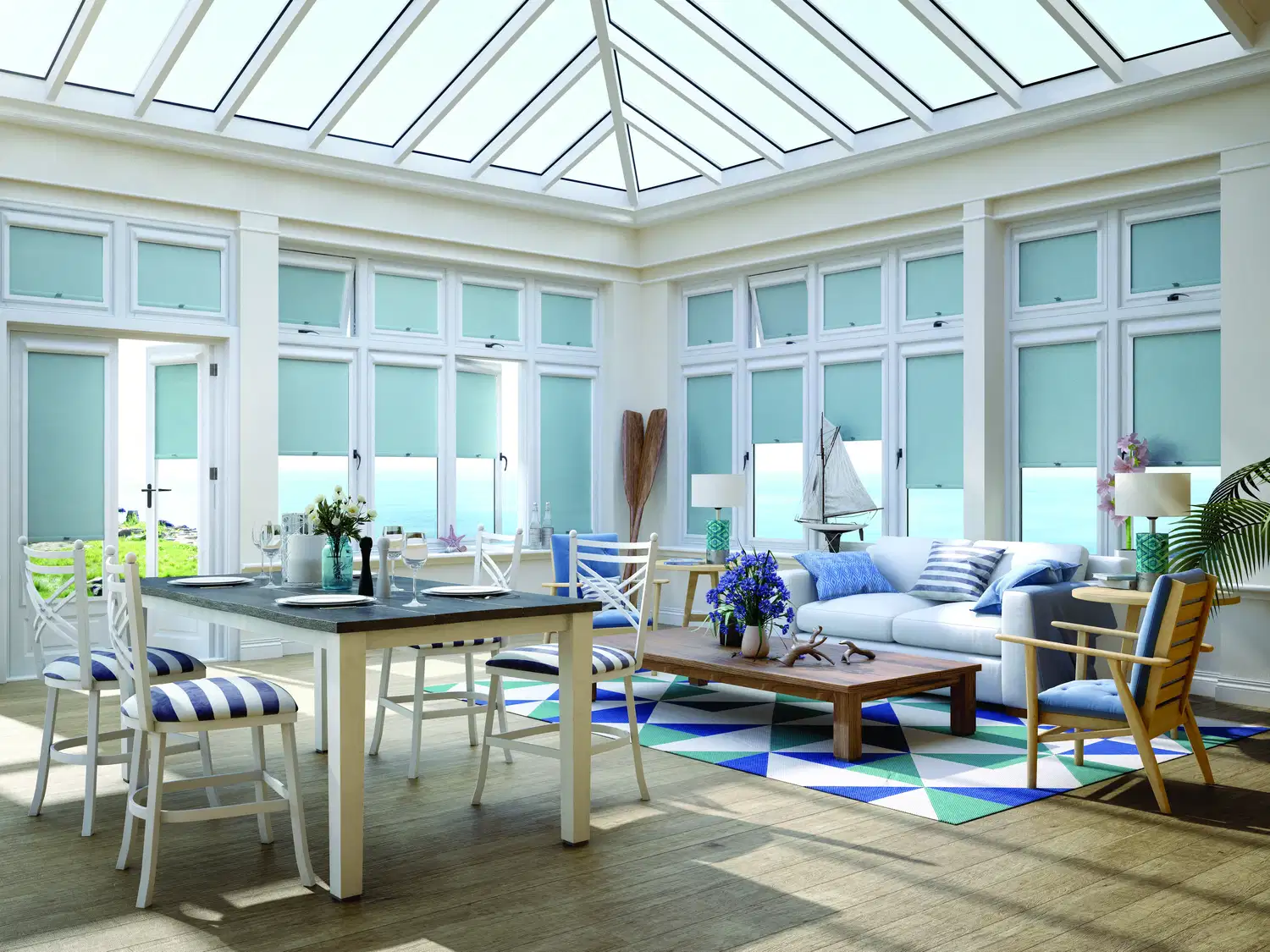
Pair with Perfect Fit. For the side windows and doors, Perfect Fit blinds work beautifully. They clip onto uPVC frames without drilling, move with the windows and doors, and give you that neat, integrated finish.
Ready to make your conservatory comfortable? Book a free home visit and we will survey your roof and windows, show you fabric options, and give you an honest quote.

Modern architecture often features stunning but tricky glazing—from towering gable ends to expansive conservatory roofs. Unresolved overhead or angled glazing
Our expert team is ready with advice, ideas, and solutions for your
windows. Simply fill in the form and we’ll be in touch shortly.
Our expert team is ready with advice, ideas, and solutions for your windows.
Simply fill in the form and we’ll be in touch shortly.